Desert Illusions: Exploring Natural Illusions and Strange Phenomena in the Desert
The desert, this vast, desolate and silent land, is often regarded as the ultimate challenge of nature. Here, the white-hot sun bakes the earth to a scorching heat, and the air is so dry that it is almost impossible to breathe. However, it is in this seemingly dead land that amazing strange phenomena and natural illusions are born. These phenomena not only make travelers lose their way, but also fascinate scientists and nature lovers. Desert illusions, as one of the most peculiar and mysterious phenomena in the desert, often give people a surreal perceptual experience. So, what exactly makes the desert a "hotbed" for these illusions and strange phenomena?
1. The relationship between extreme environment and human perception
The extreme environment of the desert is often one of the sources of these natural illusions. The core characteristics of the desert include high temperature, strong sunshine, dry air, and huge fluctuations in climate. Under these extreme conditions, the human perceptual system will be drastically affected, resulting in distortions of vision and hearing, forming illusions. For example, when people walk in the desert, due to the huge difference in air temperature and ground heat, the temperature difference between air layers causes light to bend, resulting in a seemingly floating water surface. This phenomenon is called "desert mirage", which often makes travelers mistakenly believe that there is a lake or water source ahead, but in fact, it is just a visual effect caused by the refraction of light between the air and the ground.
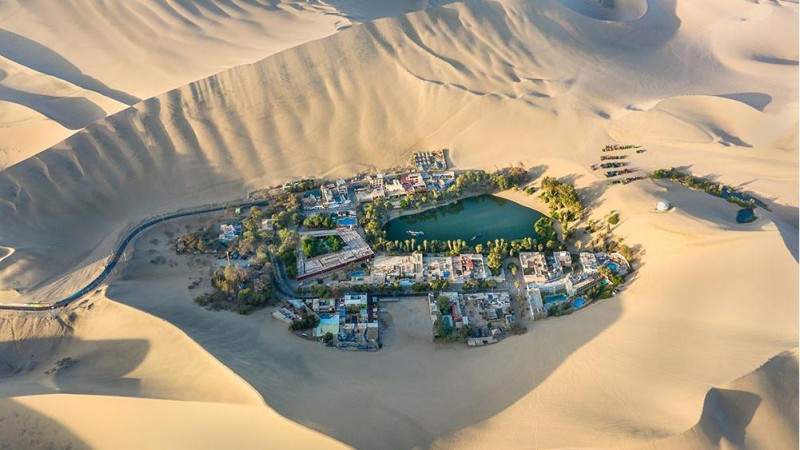
The vastness and monotony of the desert also cause people to have visual illusions. In the absence of any significant markings, travelers may feel unbalanced in direction, and their visual system cannot obtain accurate information from a single dune scene. Especially at sunset, long-term exposure to the sun can easily cause eye fatigue, further exacerbating visual confusion. Travelers may see some seemingly irregular objects or even hear some non-existent sounds.
2. Scientific explanation of desert mirage
Mirage is one of the most famous illusions in the desert. It looks like a pool or oasis in the distance, attracting people wandering in the desert. In fact, mirage is not a real water source, but a phenomenon of atmospheric refraction. When the desert ground is heated by the sun, the air creates a temperature difference between the ground and higher, which causes the light to bend. Hotter air is lighter than cooler air, which changes the propagation path of light and causes the position of objects seen by the human eye to shift. Due to the temperature difference of the air layer, the reflected light seems to be reflected from the desert in the distance, which looks like the surface of water, reflecting the surrounding scene.
This illusion will form a reflection effect visually, making people mistakenly think that there is a water source ahead, especially in the barren desert without water sources. Such illusions are even more confusing. When people try to get closer, the illusion gradually disappears, bringing deeper confusion and loss. Mirages are not unique to deserts. In fact, anywhere with a huge temperature difference, similar light refraction phenomena will occur. However, the heat fluctuations in the desert make this phenomenon particularly obvious and common.
3. "Jumping Dunes" in the Desert
In some special deserts, travelers may also encounter another incredible natural wonder-the "jumping dunes" phenomenon. This phenomenon usually occurs in the movement of sand and wind in the dunes, giving people the illusion that the dunes seem to be "jumping" or "rolling". The movement of sand dunes is a common phenomenon in the desert, but "jumping dunes" is not the actual movement of sand dunes, but the interaction between wind speed and light reflected by sand grains.
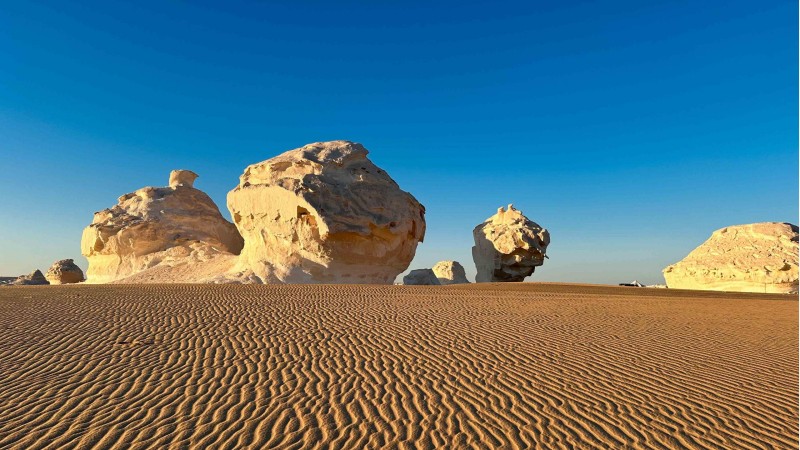
In a desert with extremely strong winds, sand grains are blown by the wind, forming certain fluctuations and undulations, and under the strong sunlight, the light reflection on the surface of the dunes often produces a "sense of flow". This illusion makes the dunes in the distance look like they are "jumping", as if the dunes themselves have life. Especially when the boundary between the dunes and the sky is blurred, the line of sight becomes unstable, and the eyes are prone to the illusion of dune movement.
4. The strange propagation of sound and echoes in the desert
The echo effect in the desert is also a very unique phenomenon. In the open areas of the desert, there is a lack of buildings, trees and other natural obstacles, and there is almost no obstruction to the propagation of sound. This means that the way and frequency of sound propagation in the desert are very different from other places. Under some special climatic conditions, the temperature difference and air flow changes in the desert will cause sound waves to be reflected or refracted in the air, thus creating the illusion of echoes.
For example, some travelers have described hearing sounds from far away, but when they approached, they found that the sound had no source. This phenomenon is actually due to the airflow and temperature layers in the desert, which cause the sound to be reflected or refracted by different airflows, creating an echo illusion. Such sound illusions often cause people to panic, especially in the desert far away from the crowd, where echoes and strange sounds often make people mistakenly think that they are not alone.
5. "Visual fatigue" and hallucinations in the desert
In a single and extreme environment like the desert, visual fatigue is also an important cause of hallucinations. When the human eye is exposed to strong sunlight for a long time, or stares at the same scene for a long time (such as endless sand dunes and sand), the eye's ability to adjust will be greatly tested. At this time, the photoreceptor cells of the eye are prone to temporary "abnormality", resulting in various illusions, such as changes in the color, shape or position of objects. The human brain often interprets these unusual phenomena in a "habitualized" way, and even regards them as supernatural existence.
In addition, the extreme climate in the desert makes the human body prone to dehydration and heat stroke, and these physiological reactions will further affect vision and thinking ability. When suffering from heat stroke, lack of water and physical exhaustion, travelers' attention is often easily distracted, which leads to more intense hallucinations and causes people to lose their way in the desert.
6. Summary: The interweaving of science and mystery of desert hallucinations
The hallucination phenomenon in the desert is the product of the mysterious interweaving of science and nature. Strong temperature differences, light refraction, air flow changes and visual fatigue will create unique illusions in this desolate land, as if the desert itself is a mysterious existence. Whether it is a confusing mirage, seemingly jumping sand dunes, or strange echoes and sound illusions, they all remind us that the desert is not only a test of the limits of nature, but also a manifestation of the limits of human perception.
In the desert, the relationship between man and nature becomes more subtle. It is in this extreme environment that we not only experience physiological challenges, but also experience a profound dislocation of vision and thinking. The hallucination of the desert is a challenge of nature to human senses, which makes us feel a strong sense of mystery and incredibleness.