Why is the sea blue?
When people set foot on the long and charming coastline of the United States, whether it is the sunny California beaches, or full of flavor of the Miami beach, that a blue sea water can always instantly catch people's hearts. This vast land around the sea, with its unique blue charm, has become the United States of America's natural scenery in a colorful stroke. But have you ever wondered why the sea water has such a fascinating blue color?
In fact, the sea water itself is just like ordinary water, transparent and colorless. The blue color we see has its roots in the sun's amazing spectrum. The light from the sun, which appears to be pure white, is actually a mixture of seven different colors of light: red, orange, yellow, green, blue, indigo and violet. The wavelengths of these seven colors of light are different, and when they reach the surface of the sea, a marvelous journey begins.

Among them, red light, orange light and yellow light are like tough pioneers, with their longer wavelengths, striving to move forward in the sea water. However, in their progress, the many molecules and particles in the sea water are like a barrier, constantly intercepting, absorbing and scattering them. Thus, in relatively shallow waters, the energy of these lights is gradually depleted.
Blue, indigo and violet light, on the other hand, are like agile sprites whose shorter wavelengths allow them to be scattered in all directions when they meet seawater molecules and particles. Blue light, in particular, dominates this scattering feast, jumping and weaving in and out of the water in large quantities, and eventually catching our eyes and allowing us to perceive the water as blue. It is like a ball of light, in which blue light is the most active dancer, coloring the whole ocean stage into a blue dreamland.
In the United States, different coastal areas, the blue color of the sea also has subtle differences. For example, near the mouth of the Mississippi River, the river wrapped with a large amount of sediment rushing into the sea. These sediments in the sea water tumbled recklessly, seriously interfering with the propagation of light. Originally pure blue seawater, here will be due to the mixing of sediment and appear yellow or brown, losing that clear blue tone.
Then look at some of the waters where algal blooms thrive, such as parts of the Florida coast. Large numbers of algal organisms fill the water, and the pigmented substances in their bodies absorb specific wavelengths of light. In this case, the color of the water changes depending on the type and density of the algae, and may take on a greenish or yellowish-green hue, in contrast to the blue sea we usually perceive.
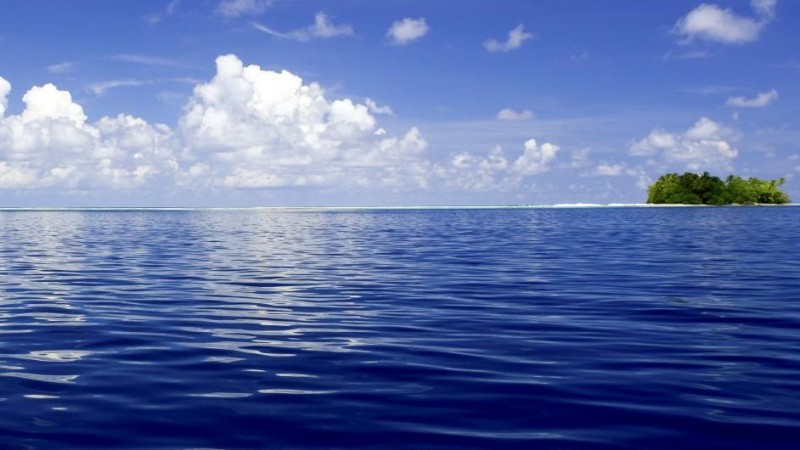
Weather and time are like two invisible hands that subtly manipulate the color of the sea. On a clear, cloudless day, the sun hangs high in the sky on the coast of the United States, pouring unreservedly onto the sea. At this time, the blue light in the seawater is scattered to the maximum extent, and the seawater is pure and dazzling blue, as if it were a well-polished blue jewel, emitting a brilliant light that amazes everyone who sees it.
When cloudy days come, the clouds are like a thick curtain, blocking part of the sunlight. The light becomes softer and dimmer, and the intensity of the scattering of the blue light in the seawater diminishes. The color of the sea is no longer so intense, but covered with a light gray tint, like an originally energetic dancer who suddenly becomes introverted and subtle.
In the early morning, the sun rises slowly from the horizon, and the light slants at a low angle onto the sea. During the long process of traveling through the atmosphere, the light undergoes complex scattering and refraction phenomena. At this time, in addition to blue light, other colors of light are also scattered to a certain extent, making the sea water present a wonderful mixture of orange-red and blue tones, as if the sea is welcoming the arrival of a new day together with the sky, and intermingling with each other to create a gorgeous picture.
In the evening, as the sun was setting, the afterglow poured onto the sea surface, and with the same low angle of light, the sea water was once again tinted with a layer of warm and deep colors. The orange-red light intertwined with the residual blue light made the water look like a sea of lit fires with a hint of dark blue depth, and it was mesmerizingly beautiful.
The blue color we experience varies greatly depending on the perspective from which we observe the waters of the U.S. coast. When we stand at the beach, close to appreciate the sea water, due to the light in the shallow area of the reflection and scattering is relatively simple, we see the sea water is often light blue, and can even clearly see the seabed gravel and shells. The seawater at this time gives a feeling of closeness and softness, as if it were a gentle friend whispering stories of the seashore.
However, when we look down on the coastline of the United States from a high altitude, such as looking out the porthole of an airplane, the view is quite different. From a distance, the light in the vast sea after a long distance propagation and scattering, a large number of other colors of light is absorbed, almost only the rich blue light constantly reflected back to our vision. At this time, the sea, like a deep and boundless blue beast, its blues are rich and deep, so that people can not help but be in awe of the magic and greatness of nature.
The mystery of the blue color of the sea is not only a visual enjoyment, but also a natural phenomenon with rich scientific connotation and ecological significance. Scientists can gain insight into the health of marine ecosystems through in-depth studies of seawater color changes. For example, abnormal changes in the color of seawater in certain areas of the sea may indicate marine pollution, abnormal water temperature or algae outbreaks and other problems, which provides important clues and basis for marine environmental protection and resource management.
For the American people, the blue water is an integral part of their lives. Children playing on the beach, chasing the blue waves, laughter and the sound of the waves intertwined into the most beautiful music of childhood; couples walking on the beach at sunset, behind the blue intoxicating sea, for their love to add an endless romantic atmosphere; the elderly sitting on the beach benches, quietly gazing at the blue sea, reminiscing about the past years, looking for solace in the blue serenity of the soul.
Whether it is in the hot summer, the cool blue sea water for people to bring the comfort of summer; or in the cold winter, the deep blue sea shows the tough and majestic power. This blue sea has always been an eternal landscape of the United States, attracting tourists from all over the world to explore its beauty and mystery. It inspires artists to create inspiration, painters with brilliant colors to depict its versatility, poets with the words of deep love to praise the depth of it, musicians with a stirring melody to play its waves.
In short, the U.S. coast of the blue sea water, seemingly simple, actually contains endless mystery, rich emotions and far-reaching significance. It is the precious gift of nature to this land, it is worth every one of us to feel, to cherish, to explore.