The world's most bizarre cuisines, dare you try them?
Cuisine is a marvelous journey across regions and cultures. In all corners of the world, there are some jaw-dropping, seemingly against the common sense, but deeply rooted in the local tradition of bizarre food. These unique foods challenge the limits of people's taste buds and demonstrate the diversity and complexity of food culture in the global village. Today, let us explore the world's most bizarre food, see if you have the courage to try.
1. Sweden - Salted Meat Pie
In Sweden, there is a traditional food called “salt pork pie”. What makes it special is that a lot of salt is used in the production process, and the meatloaf is practically covered in salt. The history of this dish goes back to a time when salt was a valuable preservative, and meat was preserved for a long time by curing it in large quantities.
Today, although preservation techniques are well developed, saltimbocca still has a place on the Swedish table. When you take a bite of a salted meatloaf, the first thing that hits your taste buds is the strong salty taste, and then you can slowly taste the meat and the unique flavor of the meatloaf itself.For people accustomed to light taste, this is undoubtedly a very challenging culinary experience, but for Swedes, it is a representative of the taste of home, carrying the memory of the years and the persistence of tradition.
2.Japan - Natto
Natto is a traditional Japanese fermented food known for its unique smell and taste. It is made from soybeans fermented by natto bacteria, and after fermentation, the surface of the soybeans will be covered with a layer of sticky, pulpy substance, which is nattokinase. Natto has a very strong odor, described by some as having a pungent taste similar to ammonia, which is often overwhelming on first contact. When consumed, natto is usually stirred well to make the pulling more pronounced, and then served with rice, soy sauce, and wasabi. Despite its unattractive appearance and odor, natto is rich in a variety of nutrients, such as protein and vitamin K2, and is believed to have many health benefits, such as improving blood circulation and enhancing bone density.Many Japanese people have been accustomed to the flavor of natto since childhood and regard it as a daily essential health food, however, for foreign tourists, drumming up the courage to try natto often need to overcome the psychological and olfactory double barrier.
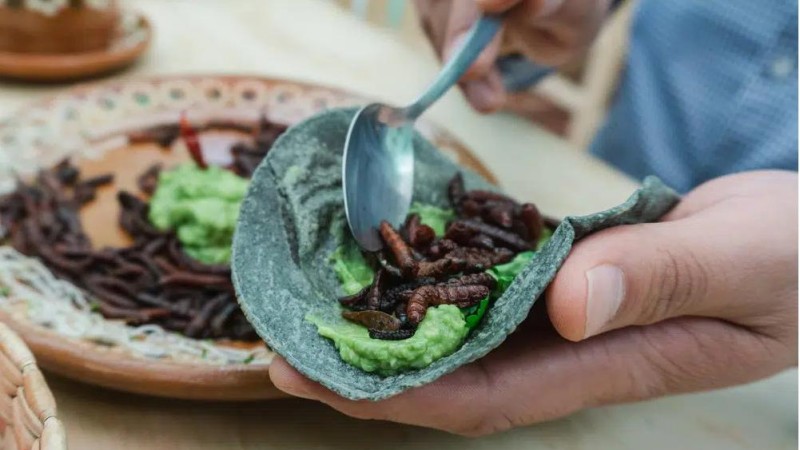
3.Mexico - Yis Carmel
Yisquaimo is a very challenging cuisine in Mexico, and its main ingredient is a kind of insect larvae that grows on the agave plant - stinkbug larvae. After being collected, these larvae are usually boiled or fried and then seasoned with chili peppers, lemon, and salt. The finished product, yisqua devil, looks like a small white pellet and the taste is said to have a distinctive nutty flavor. In some parts of Mexico, yisco has a long history of consumption, is considered a nutritious source of protein, and is often featured in traditional local festivals and celebrations.However, for most non-Mexicans, consuming the insect itself is an insurmountable psychological barrier, let alone enjoying the wriggling larvae as a delicacy.
But with the growing concern for sustainable food resources, the unique protein source of the Yisqually Devil is gradually attracting the interest of some culinary explorers trying to push the limits of their taste buds.
4. Scotland - Haggis
Haggis is a traditional Scottish delicacy made from ingredients such as haggis (e.g., heart, liver, lungs, etc.), oats, onions, and spices. These ingredients are mixed and cooked in a sheep stomach bag. After cooking, haggis takes on a pudding-like shape on the outside, and when cut open, you can see that inside is a filling mixed with oats and haggis. Haggis has a rich texture, with the distinctive flavor of the haggis intertwined with the softness of the oats, and seasoned with onions and spices to create a rich and distinctive flavor.
Haggis is one of the essential delicacies at Pens Night, a traditional Scottish festival where the traditional dish is enjoyed to bagpipe music and the recitation of poetry. Although haggis is a precious cultural heritage for the Scots, the practice of consuming haggis and using a sheep's stomach pouch as a vessel may be a bit of a deterrent for people from other regions.
5. Cambodia - deep fried poisonous spiders
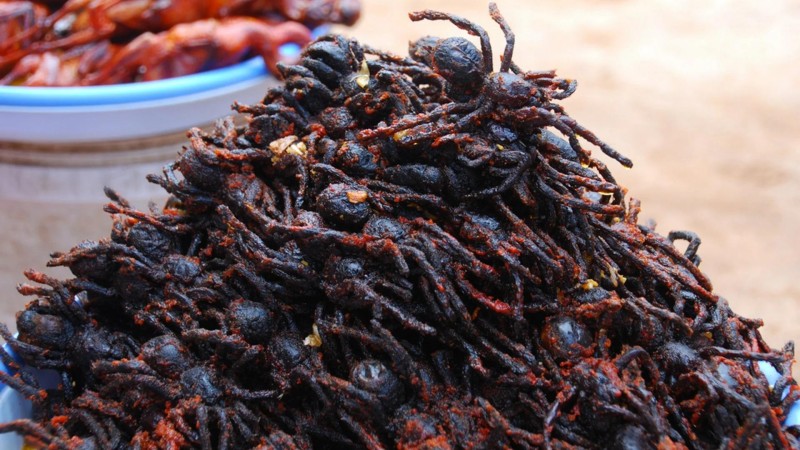
In some parts of Cambodia, deep-fried poisonous spiders are a creepy but intriguing specialty that attracts a lot of brave eaters. These poisonous spiders are usually large spiders that live in the local rice paddies, and after being cleaned and treated, they are deep-fried in a frying pan until golden brown and crispy. It is said that the crunchy texture of fried poisonous spiders is a bit like fried chicken, but the taste is more unique, with a light earthy smell and the unique flavor of insects.
The local people believe that eating fried poisonous spiders is a protein supplement, and in the past, when supplies were scarce, it became a way for people to obtain nutrition. Nowadays, although the economic situation in Cambodia has improved, fried poisonous spiders are still a specialty that attracts curiosity-seeking tourists from all over the world. However, for most people, overcoming the fear of spiders and chewing them in their mouths is undoubtedly an extreme test of guts and taste buds.
Each of these world's most bizarre cuisines has a deep cultural and historical background. They may not conform to our conventional food aesthetics, but they reflect the unique understanding and creation of food by people in different regions under specific environments and cultural backgrounds. Trying these bizarre cuisines is not only a challenge to the taste buds, but also an amazing journey to understand the diverse cultures of the world. Are you brave enough to embark on this culinary adventure?